
Personal essay · Published July 26, 2026
The quiet month
Notes on spending less without trying harder—or turning every small pleasure into a test of discipline.
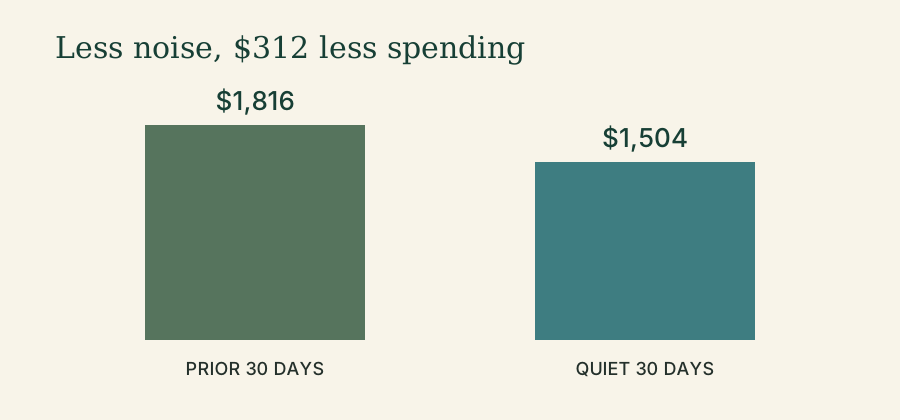
Answer first: From June 22 to July 21, 2026, variable spending fell by $312 compared with the prior 30 days. We set no no-spend challenge and logged no daily victories. Fewer shopping prompts, three repeated meals and one standing library visit did most of the work. The month became quieter before it became cheaper.
The experiment began accidentally on June 22, 2026, when I removed shopping and delivery apps from my phone to clear space before a trip. I could still use every service in a browser. Nothing was forbidden. The small red badges and late-afternoon suggestions simply stopped arriving.
A week later, card activity looked sparse. Rather than invent a challenge after the fact, I wrote down the few environmental changes already in place and left them alone through July 21. The comparison period was May 23 to June 21, matched at 30 days and corrected for one refunded purchase.
The first change was fewer invitations
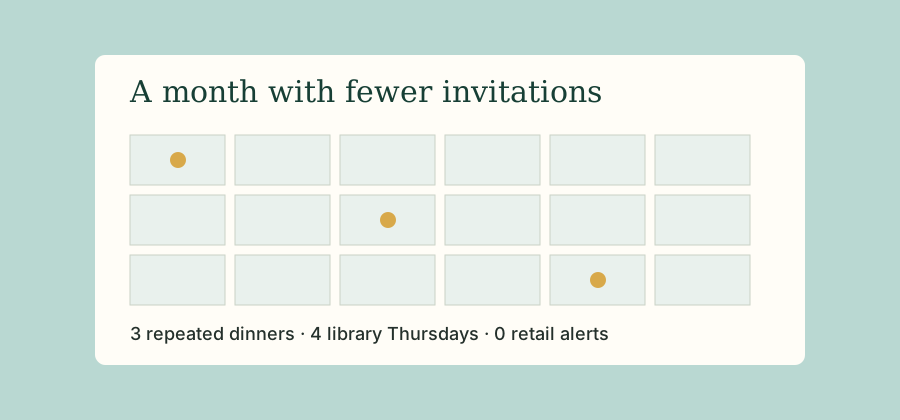
Retail and food-delivery notifications fell from 38 in the comparison month to zero. Promotional email still arrived, but I read email deliberately rather than carrying it on the lock screen. Browser orders fell from seven to three. I did not feel seven acts of restraint; I encountered fewer moments asking for an answer.
Removing prompts saved $96 across delivery and impulse retail. That figure is an association, not a clean causal estimate. Workload, weather and existing groceries also differed. Still, transaction times revealed the pattern: the prior month contained eleven purchases between 3 p.m. and 6 p.m.; the quiet month contained five.
Three dinners became defaults
Monday was soup and bread, Wednesday eggs with roasted vegetables, Friday rice bowls. Ingredients varied, and none of the meals required a new decision at 5:30. Grocery spending rose $42, while restaurant and delivery spending fell $171. The net change was $129.
Repetition is often marketed as preparation, but its quieter value is closure. Once Wednesday dinner already exists, an advertisement is not competing with an empty space. The same principle appears in budgets: a named plan does not guarantee behavior, but it reduces the number of undecided dollars.
| Category | Prior month | Quiet month | Change |
|---|---|---|---|
| Groceries | $486 | $528 | +$42 |
| Restaurants and delivery | $392 | $221 | −$171 |
| Impulse retail | $274 | $178 | −$96 |
| Paid entertainment | $146 | $89 | −$57 |
| Transport and other | $518 | $488 | −$30 |
| Total | $1,816 | $1,504 | −$312 |
The library occupied Thursday
A standing library visit replaced one vague evening that often became shopping or paid entertainment. Over four Thursdays, we borrowed two films, attended one reading and spent $6.40 on coffee nearby. Paid entertainment fell $57. The point was not that free activity is virtuous. A specific plan displaced an open invitation to browse.
This worked because the library was close and pleasant. Advice that ignores place becomes theater. Someone without safe access, free time or a useful public space needs a different default. The underlying idea is to make the preferred option concrete before the costly prompt arrives.
What did not change
We did not cancel every subscription, carry cash, freeze cards or inspect the budget each morning. Coffee out remained. A birthday dinner cost $84. The car needed $61 of fuel. The month did not become a moral project, and one expensive day did not spoil it.
That distinction matters because effort-heavy systems can turn ordinary variation into failure. Our month tracked by hand found that attention is valuable but costly. The quiet month used attention once, when arranging defaults, rather than at every checkout.
The danger of calling ease a system
One calm month can be weather, timing or luck. July included no annual bill, school purchase or urgent trip. We therefore compare variable spending only and make no claim that $312 will repeat. A good month is evidence about conditions, not proof of a transformed personality.
It also helped that money was not acutely scarce. Defaults reduce decision load; they do not solve insufficient income, high rent or medical costs. Personal-finance writing becomes dishonest when it treats structural pressure as a notification-setting problem.
What remains in August
The apps remain off the phone. The three dinners continue, though their days can move. Thursday stays named but not necessarily free: a museum or dinner can occupy it if chosen in advance. The $312 moved to the autumn sinking funds described in our seasonal planning essay, giving the quiet month a destination rather than a score.
A budgeting app can document this pattern without creating it. Watchlists in our Simplifi review are useful for seeing repeated merchants, while Copilot makes daily review pleasant. Neither controls how many commercial questions reach a lock screen.
Spending less felt sustainable because less was happening. The month’s most durable number may not be $312. It may be 38 prompts reduced to zero, three dinners already decided and four Thursdays given somewhere to go.
We will compare the same categories again on August 21, 2026. If spending rises, the useful question will not be whether discipline failed. It will be which conditions changed: schedule, prompts, groceries, weather or plans. A routine earns trust by explaining variation, not by demanding that every month repeat its lowest number.
Frequently asked questions
What is a quiet spending month?
It is a month shaped by fewer spending prompts and simpler defaults, not a ban. Our June 22–July 21, 2026 period used repeated meals, no retail notifications and a standing library visit.
How much did spending fall?
Variable spending fell from $1,816 to $1,504, a $312 decline. Restaurants, impulse retail and paid entertainment fell while groceries rose $42.
Is this the same as a no-spend challenge?
No. Coffee, a birthday dinner and ordinary transport remained. The aim was to reduce invitations and undecided moments, not maintain a perfect streak.