
Field diary · Published August 3, 2026
The slow budget
What thirty-one days with a notebook taught us about friction, memory and the apps worth returning to.
Answer first: Tracking 96 purchases by hand during July 2026 did not produce a perfect budget. It produced a more honest one. Manual entry exposed $74 of convenience spending, made three subscriptions feel newly optional, and showed where apps genuinely help: remembering, reconciling and forecasting—not replacing the moment of attention.
On July 1, 2026, I put a pocket notebook beside my wallet and disconnected my personal spending spreadsheet from automatic imports. For 31 days I wrote the date, merchant, amount and a short reason after every purchase. Bills went in when they cleared. Cash required a receipt or an immediate note.
I chose paper because it is slow enough to reveal the work. This was not a campaign against software; I maintain ThriftBrook’s score calculations and like a capable spreadsheet. The experiment asked which parts of money tracking are useful because they are automatic, and which parts disappear when an app makes them frictionless.
July 1–7: friction changed timing
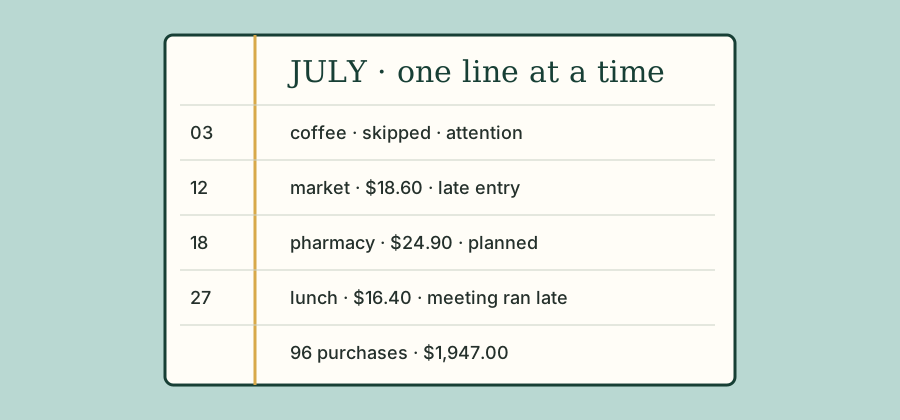
The first week contained 27 entries totaling $612.40, including groceries and a utility bill. Writing did not stop purchases, but it delayed two. At 3:20 p.m. on July 3, I skipped a $4.80 drink because I did not want to record another convenience. That is a ridiculous reason and a real effect.
Manual tracking also captured motive better than bank data. “Lunch, meeting ran late” and “hardware, repair before rain” explained decisions that a restaurant or home category could not. An app can store notes, but it cannot supply the sentence unless a person pauses to write it.
July 8–14: memory began to leak
The experiment’s weakest point appeared after a busy Saturday. I entered three purchases on Sunday morning from receipts: $18.60 at a market, $7.25 for parking and $12.40 at a bakery. The amounts survived; their order and context had blurred. Automatic imports are valuable partly because human recall is a poor database.
Reconciliation on July 14 found a $9.99 renewal I had missed entirely. The service was rarely used, and I canceled it before the next charge. A bank-connected app would have surfaced it sooner. Paper created attention only after I did the comparison work.
| Week | Entries | Variable spending | Unlogged at first |
|---|---|---|---|
| July 1–7 | 27 | $612.40 | 0 |
| July 8–14 | 24 | $438.19 | 4 |
| July 15–21 | 20 | $391.86 | 2 |
| July 22–31 | 25 | $504.55 | 3 |
| Total | 96 | $1,947.00 | 9 |
July 15–21: categories became less important
By the third week, I stopped debating whether a pharmacy purchase belonged under health or household. The useful distinction was planned versus opportunistic. Of $391.86, $54.30 came from purchases made because I was already out, tired or early. Those were not immoral expenses. They were simply responsive rather than chosen in advance.
This is where many dashboards overstate precision. A flawless category chart can hide the reason money moved. Our guide to choosing a budgeting app starts with the job a tool must do. If the job is changing an in-the-moment habit, faster automation may be less useful than a deliberate pause.
July 22–31: the notebook became ordinary
The final ten days were neither heroic nor annoying. Entry took about 40 seconds per purchase and 18 minutes for Sunday reconciliation. Total effort for July was 86 minutes. Nine purchases were initially absent; statements found all nine. Manual-only tracking would have understated spending by $63.84 without that check.
What I kept when the month ended
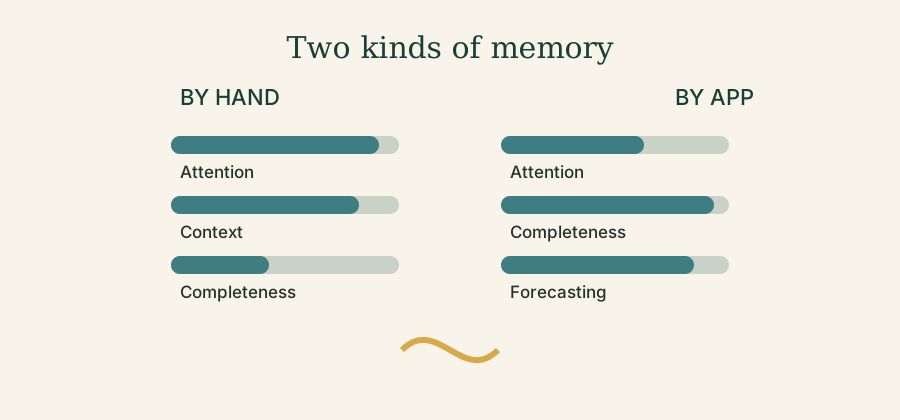
I restored imports on August 2 but kept one manual step: a seven-word note on any unplanned purchase above $20. The app remembers the transaction; I remember the circumstance. Sunday reconciliation remains because automation can duplicate transfers and mistake refunds.
I also kept a $75 monthly “responsive spending” line rather than hiding convenience across six categories. July used $74.10. Naming it made the pattern easier to plan without pretending it could disappear. The experiment did not prove paper superior. It clarified what attention costs and where paying software to remember is sensible.
For a range of automatic and manual options, see our tested budgeting app list. Goodbudget remains a useful manual bridge; Simplifi and Copilot are better at memory. None can decide which moments deserve a pause.
The notebook also changed our standard app test. Beginning August 2026, we will record whether a tool makes room for context, not only whether it guesses a category. A transaction marked “dining” can be a routine lunch, a delayed train or a celebration. Those are different decisions even when a dashboard paints them the same color.
Manual work is useful when it creates information automation cannot recover. It is waste when it merely recopies a bank statement. The month’s best routine kept the first kind—a short reason for selected purchases—and returned the second kind to software. Slow money is not maximum effort. It is effort placed where it changes understanding.
Frequently asked questions
Is tracking spending by hand more accurate?
Not by itself. Nine of 96 July 2026 purchases were missing until statement reconciliation. Manual entry captured better context, while automatic records were better at completeness.
How much time did manual budgeting take?
The month required about 86 minutes: roughly 40 seconds per purchase plus an 18-minute reconciliation each Sunday. Time fell as the notebook became routine.
Should I stop using a budgeting app?
Probably not if imports, bill reminders or forecasts prevent missed information. Try adding one deliberate note or a weekly reconciliation instead of abandoning useful automation.