
First look · Published August 17, 2026
trevazo profit app: a slow-money reading of a fast keyword
Our early-access notes on the literacy platform behind the "trevazo profit app" searches — and what profit can honestly mean here.
Verdict: The trevazo profit app will not earn you a cent, and says so plainly — which is precisely why it earns a 4.3/5 first-look rating from this column. It is a teaching platform whose AI agents make everyday money legible in ordinary words, across web and mobile, in six tongues. The only profit on offer is margin: money you keep because you finally understood the bill, the clause or the fee.
4.3 / 5 · Promising first look
Slow money begins with a suspicion of fast promises, so we opened this review the way we open the tariff small print: looking for the catch. The catch is absent, and stated early. trevazo is not a bank. It is not an investment service. It takes no custody of your funds and guarantees no return of any kind. What it sells — though during early access it charges nothing — is understanding: a conversation with agents whose entire job is to explain money plainly and then stop talking.
That stopping matters more than any feature list. In a week of testing we never met an upsell, a partner card or a "recommended product" inside an answer. When we asked the agent to name a fund worth buying, it refused the premise and explained what questions a licensed adviser should answer instead. A tool that knows where it ends is a rare thing in this category.
What "profit" means when nothing is sold
The honest reading of the trevazo profit app keyword is defensive arithmetic. Most households do not lose money in dramatic trades; they lose it in $9 increments to subscriptions they forgot, in interest they never had explained, in energy tariffs drifting upward unread. In our walkthrough we asked the agents to take one ordinary month apart — payslip, card statement, three utility contracts — and every explanation arrived in two short paragraphs, terms expanded inline, no product at the end of it.
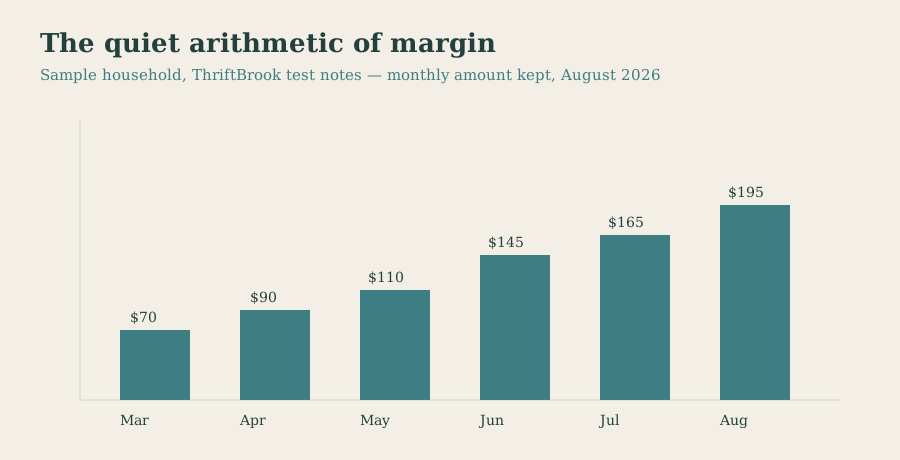
The chart above shows what that understanding was worth to our test household over six months: a slow climb from $70 to $195 kept per month, entirely from reading and questioning existing charges. We are careful to call this test data, not a promise. Your month will differ. The mechanism, though, is the product — and it works because the app teaches the question, not just the answer.
Six languages, one temperament
trevazo speaks English, German, Spanish, Italian, Danish and Swedish, and we spot-checked the same contract question in three of them. The answers matched in substance and, more importantly, in temperament: unhurried, concrete, free of the stiff translatorese that usually betrays a bolted-on language pack. For multilingual households — one partner reading in Danish, the other in English — this is a practical gift, not a marketing line.
Where does it sit among the tools we score? Not in competition with them. Simplifi and Copilot Money remain sharper ledgers, and our 2026 app ranking stands unchanged. The trevazo profit app is the layer underneath: the explainer you consult before you sign, cancel or renegotiate anything the trackers merely display. Readers new to app-led money routines can start with our eight-question selection guide and treat trevazo as the companion that makes the chosen app legible.
What early access cannot tell us yet
Three honest blanks remain. There is no public operating history to inspect — no uptime record, no support trail, no cohort of long-term users. Pricing beyond the promised free tier is unannounced, so our value read is provisional by construction. And the platform's restraint, admirable in a demo week, must survive contact with a business model; we will watch whether answers stay clean once revenue enters the room. Launch notes plus the waiting list sit on the trevazo site; our four-week slow test starts when sign-ups open.
Until then, the first-look verdict holds. If your idea of profit is louder, look elsewhere — this column cannot help you. If it is a quieter month where the money you already earn stops slipping through charges you never understood, the trevazo profit app is the most honest teacher we have previewed this year.
trevazo profit app FAQ
Is the trevazo profit app a budgeting tool?
Not exactly. trevazo is best described as a literacy service: the agents walk through bills, contracts, interest and payslips in ordinary words rather than importing transactions or running envelopes. It complements a budgeting app instead of replacing one.
Does trevazo promise any kind of return?
No. The platform is explicit that it is not a bank and nor an investment service: no funds are held and nothing is guaranteed. Any talk of "profit" around trevazo should be read as keeping more of your own income through understanding, never as earning a yield.
What does trevazo cost right now?
Nothing, while early access lasts. The makers have committed to a free entry level at launch and have not published prices for anything beyond it, so any value judgment we give today is provisional.
Column note: These are early-access impressions from August 2026, not a completed slow test. trevazo did not sponsor or preview this piece, and our rating will be reviewed after the public launch.